
The Silent Propeller
Finding the extraordinary in the ordinary

I’ve been learning something about the way we protect the things that matter most. If you needed to hide a revolution—something so advanced it defied the known laws of physics—what material would you reach for? You probably wouldn’t think of a block of wood.
As a maker, I find myself endlessly fascinated by the places where high-tech dreams meet low-tech, analog solutions. We’ve grown so used to the idea that complex problems require digital answers, but history often whispers a different story. It tells us that sometimes, the most brilliant solution is the simplest one.
In the early 1940s, the Bell P-59 Airacomet was America’s great secret—our very first jet-powered fighter. To the people of 1942, an airplane without a propeller was a ghost, an impossible machine that shouldn’t be able to breathe, let alone fly. The military faced a strange dilemma: how do you move a “propeller-less” plane across a busy airfield without every spy and curious onlooker noticing that the impossible had come true?
The answer was a triumph of maker ingenuity. The ground crews didn’t build a high-tech cloaking field. Instead, they picked up their carving tools.
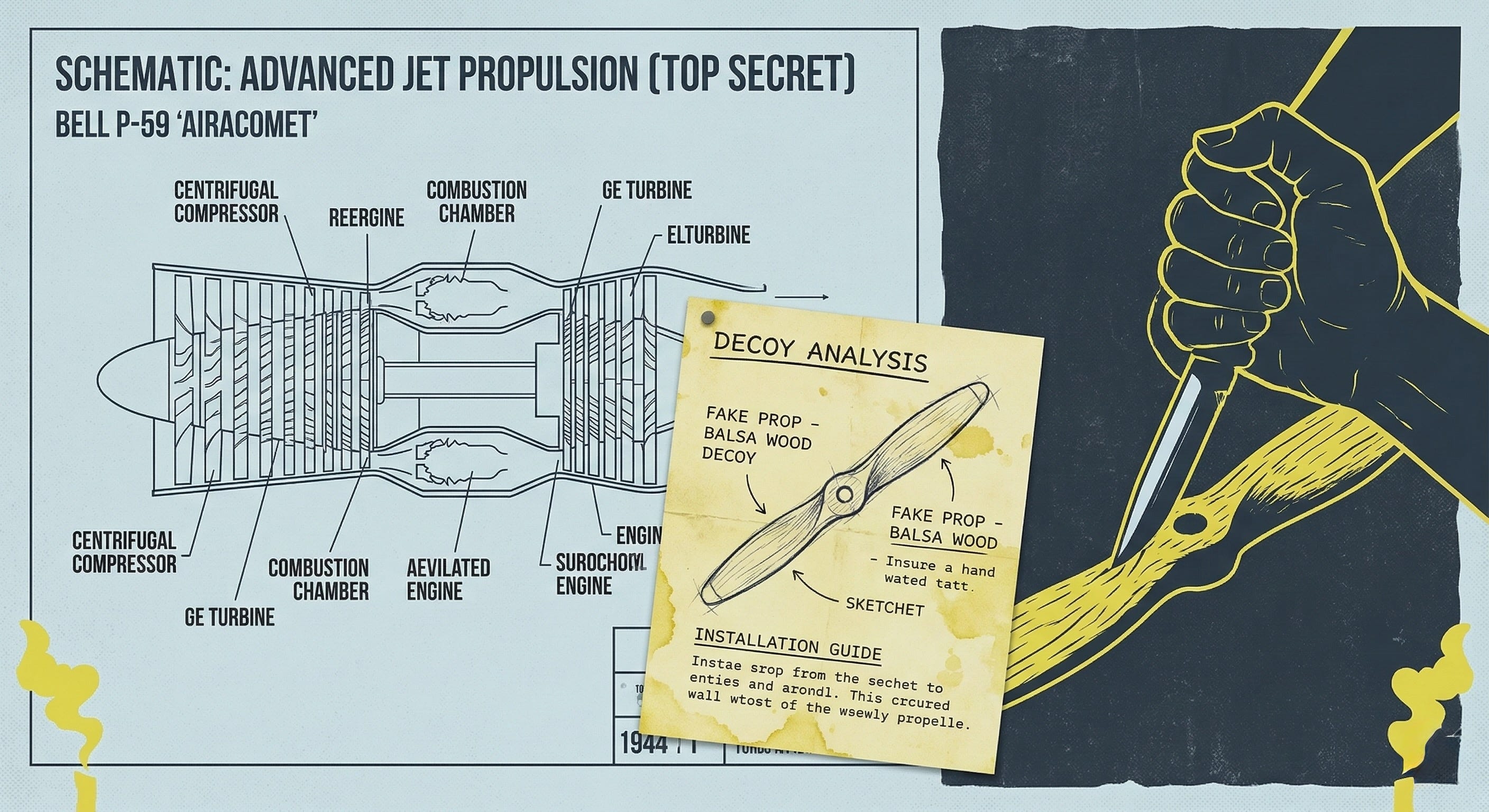
Mechanics fashioned a dummy propeller out of wood and simply bolted it to the nose of the P-59 whenever it was on the ground. Hidden in plain sight, the future looked like just another conventional plane from the past. I love the thought of those mechanics—hands covered in sawdust—guarding the birth of the Jet Age with a piece of pine.
This gentle tension between the analog and the advanced is exactly what I wanted to capture in my middle-grade mystery, The Secret War.
In the story, rumors of a “ghost engine” over the Ohio skies set everything in motion. But when my protagonist, Jamie, goes looking for the truth, he doesn’t use a gadget. He uses his brother’s vintage Rolleiflex camera.
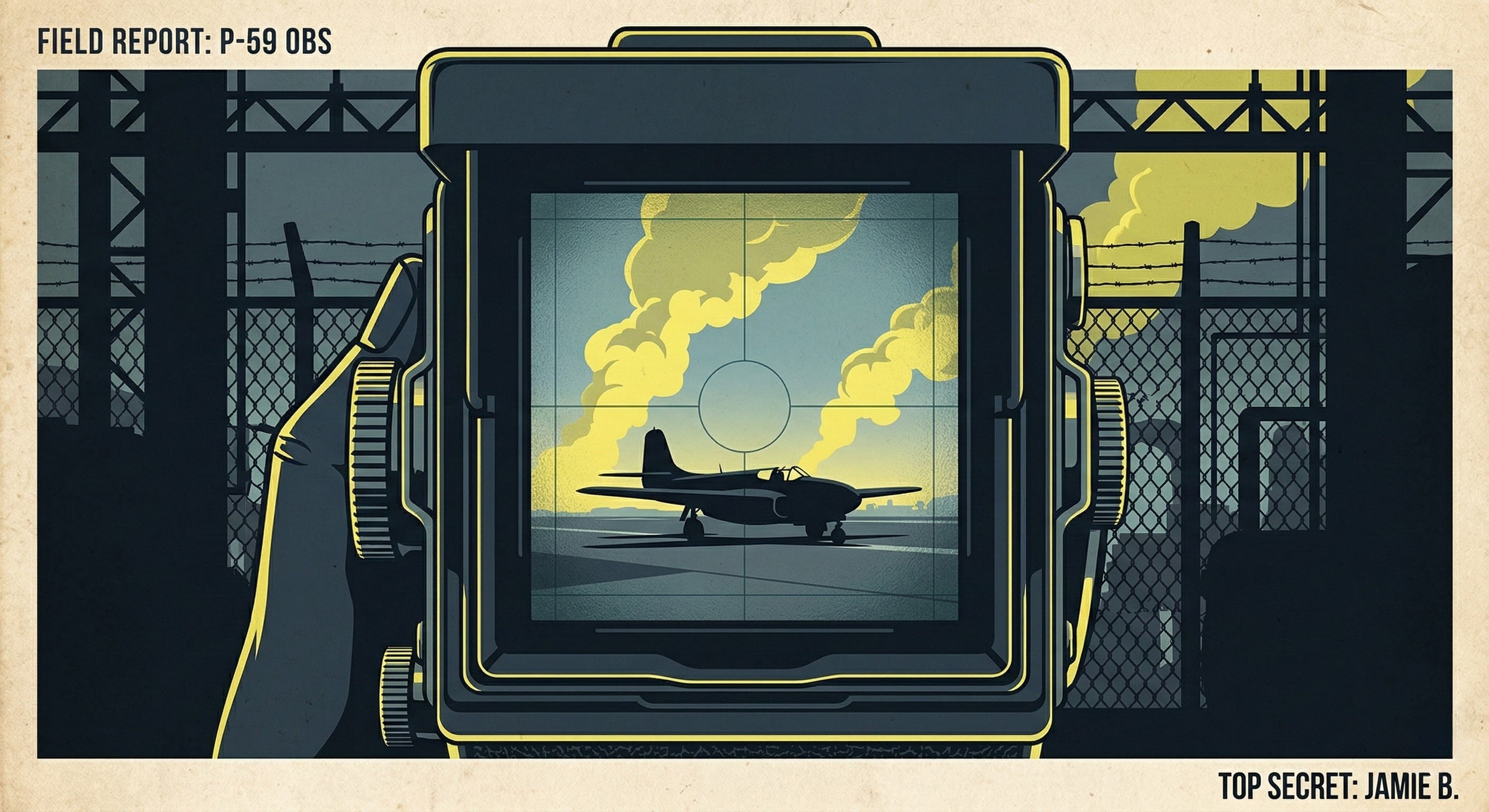
There’s a kind of Zen in using a manual camera. To see the world through it, Jamie has to bow his head and look down into a frosted glass viewfinder where everything is projected backwards. He has to turn physical dials to bring the blur into focus, and then retreat into the sanctuary of a darkroom to let chemical alchemy reveal what his eyes couldn’t quite catch.
When we teach children to trust their hands and their own observations—whether they are carving balsa or mixing developer—we aren’t just teaching them “old” skills. We’re giving them the tools to decode a complex world. Analog ingenuity isn’t a relic; it’s a superpower.
Bring The Secret War to Your Readers
As a teacher-librarian, I’m always looking for ways to make the “making” of history feel real. I’ve put together a free Educator’s Resource Kit at toddburlesonwonders.com that includes a 20-day pacing guide and “Student Field Notes” to help your readers become makers themselves.
If you’re looking for a screen-free summer read for those curious 10-to-13-year-olds, I’d be so honored if you shared Jamie’s journey with them. The Secret War is available now on Amazon, with more formats coming very soon. Thank you for helping your readers learn to bravely bear witness to the truth.
A Flight of Fancy
I wonder if there are “wooden propellers” in our own lives today—simple, quiet habits or old-fashioned rituals that are actually guarding something revolutionary inside of us. If you could carve a disguise for your biggest, most “impossible” dream, what would it look like? Perhaps, like the P-59, your greatest flight is just waiting for the right moment to take off.